

This is Not a Love Story
Quality Control
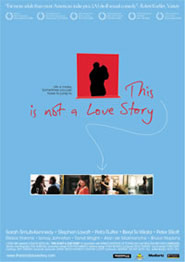
Advertising poster (click to enlarge)
COP Outcome development and evaluation
This was monitored by the experienced professionals working all day on the shoot. The experience of a shoot
is very intense and open to continual scrutiny by experts who have to get it right. Everyone is watching the product develop in one place at a time. A number of takes enables several chances to improve on the work.
Keith had the rushes
available for actors and crew to see the next day. He wanted them to be encouraged by the high quality work he saw being achieved. The rushes enabled Keith to decide whether re-takes were needed. Only two were.
Post Production
But the film is not complete at the end of shooting. It still needs to be edited, sound effects and music added and then printed onto 35mm stock to enable projection in the cinema. This process plus extra shooting and the creation of special effects occupied Peter Jackson's company for an entire year between the release of The Lord of the Rings films. It has taken longer for Keith because of insufficient funding. But he had a cut ready for screening by January of 2000 and a number of audiences were able to give him valuable feedback. A Film Commission questionnaire was used for test screenings and this material convinced Keith to shoot a new opening and reduce the scenes. He shot material to signal the comedy of the story which had not registered with audiences. Re-editing eliminated one character completely and greatly diminished the role of another.
The Commission was not forthcoming with funds to enable the film's blow-up to 35mm so Keith took the video of his film to film markets in Los Angeles and Cannes. He found that films there already had distributors who were looking for award winners to boost the reception of their product. Many had name actors in them too. And the films were all 35mm. Undeterred, Keith visited some art house cinemas and asked himself what it would take for audiences to want to see his movie.
