

Delivery

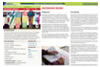
Bending the wood in a press to shape the curvature of the board
The unit began with a look at the history, trends and culture of skateboarding. Dave Green was introduced to the class and related his experience with the New Zealand skateboarding industry from its earliest days, putting the project into context, showing the students how their projects could fit into the progression of skateboarding from its inception through to current boarding styles.
"Dave gave us a talk about his history and his involvement with skateboarding and everything else about the culture that goes along with it and had the students in awe. Dave had the experience and connections within the industry which made the whole thing much more real for the students. He also taught me and the class woodworking techniques we weren't aware of which proved invaluable later on."
Alexia believes that this introduction made all the difference to the attitude within the class and to the level of enthusiasm and participation.
The groups were then formed and a strategy for progression put in place, research began with the students using YouTube videos to study some of the production techniques for skateboards within the industry. Each student had specific research they were responsible for which they then had to report back to the group.
Work then began on the design, where group decisions were made on size, shape, and contour in accordance with the intended function of the board, with larger boards for cruising and smaller ones for tricks. At this point the assigned students also started drawing up plans for the board graphics. With a basic design drawn up, the students now had a visual guide as to what they wanted to do and could communicate this to the other groups, Alexia and Dave.

Student cutting a skateboard shape into the pressed wood
The groups then began to experiment with various materials, using different combinations to find the best result possible for weight, strength and ease of use. Once the groups had decided on the best combination of design and materials and showed that they were able to communicate this into a workable plan, construction began on the first prototype boards.
The first step in the construction process was to create moulds for the fundamental board shape. The students cut several pieces of MDF to the desired shapes. They found it challenging to 'get their heads around' the complex curvature that was needed to improve the structural strength of the boards, so multiple experiments were carried out until the students felt confident enough to press their first prototypes.
To make a typical skateboard body requires several layers of thin wood to be pressed together between a male and female mould of wood or concrete. Great pressure is needed to fix the shape of the mould into the board while dry – to make the board strong enough to take the punishment of everyday skateboarding, it was important that there were no gaps between each layer. With no access to the high-pressure presses used in industry, the class needed to find a press that was affordable. In a stroke of inspiration, Alexia came up with the idea of using a common automotive bottle jack as a simple, affordable solution, easily providing the necessary pressure when used within a solid wood and steel frame.
The female mould was placed at the bottom of the makeshift press and three layers of 3mm plywood were then placed onto the mould, each coated with glue to form a firm bond. The male mould was then placed on top and the bottle jack then pressed the male mould down into the female mould, sandwiching the plywood layers in between. This was then left overnight, or sometimes longer, until the layers of plywood permanently took on the curves of the mould. While primitive in comparison to current industry technique this method gave the students a truly hands-on experience of making a board and seeing the process that goes into its creation.
The students weren't entirely happy with the first results that came out of the press. The plywood layers weren't sticking together properly, which they blamed on the materials used. The class managed to source the same one millimetre wooden veneer used in the industry, which while superior to the 3mm plywood in many ways, also created problems of its own.

Student shaping the cut board
"The veneer was so thin that it actually bubbled because we didn't have full area surface contact. We had to do a little problem solving then come back and decide what changes we would make to our jigs to make it work or we would have had to revert back to the plywood," Alexia said. Repeated trialling eventually solved the problem and a second batch of prototype boards began to come out of the press.
A paper pattern, similar to a dressmaker's, was then placed onto the board and traced around to get the basic board shape. This was then taken to the band saw where a rough cut was done leaving a margin of a few millimetres for error and for the finer finishing work that was to follow.
At this stage Alexia noticed the atmosphere of the class change – the students began to engage in a way they hadn't at the start of the unit.
"When they saw the skateboards beginning to look like skateboards, they really started to realise that they had done something special. In those final weeks, where the pressure was on and they had to do a lot of problem solving as the boards started popping out, that's when I really saw them animated."
Final shaping was done, following Dave's advice, by using a spokeshave for the finer work on the edges. When each member of the team was happy, final sanding prepared the surfaces for the Graphics students to go to work on putting each team's final signature touch to the boards. In preparation for final testing, trucks and wheels were then screwed to the bottoms of the boards and grip tape stuck on the top.
Onthe final day of the project, the class made an excursion to the local skate park to test and show off their final outcomes – and to take part in a friendly competition where Dave and Alexia appraised each board's look and performance. The project was officially ended with a final awards ceremony. Certificates were awarded for the best graphic design, most dedicated team leader and most effective board shape. The best overall team was awarded the grand prize of four sets of new skateboard trucks courtesy of Dave Green and Cheapskates.
The winning team showed the right combination of all the elements and their dedication, teamwork and innovation at all stages of the unit was taken into account along with their board's unconventional design and level of performance on the day. "All the boards had merit, but the winning team's board was one of the best finished and had quite an innovative design – they listened and executed things well and came up with some points of difference."
