

Pre-planning
Teachers in the Technology department had discussed how they could change their programmes to fit in with the Technology curriculum and the proposed changes in 2010 (when the Technological Knowledge and Nature of Technology strands would be incorporated). They decided to trial a combined Year 9 programme in 2008 in which they would teach these strands plus the existing Technological Practice.
After considering how best they could implement a Year 9 programme that would strengthen Technology throughout the school and meet the needs of the students, the community and the new curriculum, the department decided to follow the model used at Havelock North High School – see case study BP608 Programme Planning. Making a focus for each term, such as writing a brief, allowed the Takapuna teachers to research and develop resources to make these aspects relevant to the units and the students.
The year-long programme was already divided into four terms corresponding to four subject areas designed to cross-link with each other. Students took a term of Food, Soft Materials, Hard materials and an ICT/Graphics unit called Product Design, which focussed on improving student design thinking, modelling, developing graphics and ICT skills, and using technological practice to develop a product for a specific target market.
All Year 9 students were tested on their technological literacy at the beginning of the year, to give teachers an indication of what learning needed to be introduced or reinforced. Most of the students had been taught craft skills rather than Technology at intermediate, so the first term had to include an introduction to the tools of technological practice – briefs, planning, etc, for each of the four subjects.
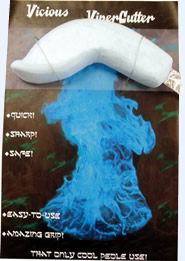
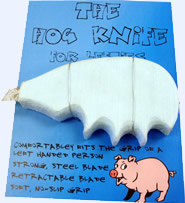
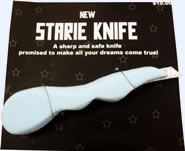
The Product Design course, taught by Lesley Pearce, Demelza Cusens, Anthony Kwan and Steve Pearce, would be taken by 350 students altogether so cost was an important factor. Planning involved coming up with a project based on an inexpensive product that would also enable teachers to bring up a lot of technological issues during the course.
The Craft Knives project was based on a unit Lesley had taught years earlier, but was completely revised to fit in with the three new strands of the curriculum. Using a small, inexpensive item like this allowed students to easily look at existing products, their materials and features, ergonomics, and fitness for purpose.
Lesley notes that this unit is particularly good at seizing the boys' attention. "We investigated all sorts of things – you could look at bakers' knives, hunting knives, all kinds of dangerous objects, as you can imagine!"
