


Enterprise Links
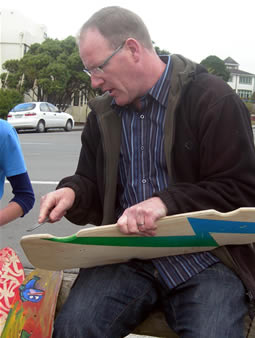
Dave Green examining the finished skateboards
Dave Green has been involved in skateboarding for over 31 years and knows the industry inside and out. His interest in the sport began as a competitive skateboarder, and he then moved into manufacturing – first one-off's in his father's garage – before becoming one of the four joint owners of the Cheapskate's franchise, New Zealand's most recognisable skate and snowboarding shop.
When those in industry work with schools, there are often benefits on both sides. For Alexia the advantage of working with Dave was obvious – he could share years of experience within every aspect of the skateboard industry. Dave could give her and the class his knowledge of the different aspects of skateboard production, the changes within the industry over time and a knowledge of the market. Alexia also believes that Dave added 'an element of cool' to the unit, which she says was crucial in gaining the interest, passion and respect of the students.
"Dave's mentorship couldn't have been more important to this unit. I didn't know much about skateboards before I started looking into the unit, whereas he had the experience and the connections so it was a really great partnership because we were able to work together and come to the best way of doing things for us and the students. And although the kids would have enjoyed making skateboards without Dave's input, his involvement made it all seem more real and more important."
From Dave's perspective, he respected Alexia's passion and enthusiasm for getting a relatively unconventional and challenging project off the ground with great results. "Alexia was really enthusiastic about what she was doing and had the ability and perseverance to make it happen. She put in a lot of time and research and came up with something that was very contemporary that the whole class got behind. So I give her full marks for doing that as the students and I really got something out of it."
Dave feels that his personal history coupled with his connection to a widely recognised brand played a huge part in gaining the trust and respect of the students over the course of the unit. "I think I contributed a certain level of credibility – because they recognised our brand, because I was a skateboarder and because 30 years ago I was exactly where they are now, including being in that exact room, doing exactly what I was doing with them. And I had made the finished product and I knew that it would work and that they'd be happy with it," Dave says.
Dave feels that the project benefitted him in ways both professional and personal. "It was good getting in amongst the younger generation of people interested in the sport – it's something that you don't get a chance to immerse yourself in that much. I mean I see young kids and I sell them skateboards, but I've never really been immersed in a group of 30 of them, so I found the whole experience really rewarding. These kids are the future of our country here, so I feel that contributing like this is a way of getting behind them and giving encouragement where you can. I would recommend it to other businesses, as it's a way you can put something back."
With the project proving itself to be of value to both parties and manageable with the time and resources available the next consideration is whether this relationship can be realistically sustainable. When taking into account the positive response to the unit (from those both directly and indirectly involved) and the successful outcomes it produced, Alexia is confident that the project has a future and Dave green agrees.
"My feeling was that Alexia and I both really enjoyed it and if the opportunity arises again for me to be involved again then I'll definitely be there because I'm all the better from doing it last time."
