

Modelling as a Creative Process
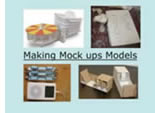
For Matthew modelling is a central pillar of the design and development process, and can be, and most often should be, used at every stage of a product's development, from concept to completion. Modelling is a form of practical evaluative process, used to explore and gauge not only form, function and aesthetics, but also appropriate materials and construction techniques, and finishing techniques and materials.
"Early in Year 12 we explore a variety of materials, their properties and how they work and how the material might be used in an eventual project, but also how the material might be used in a model to explore an alternative design."
"Some of the graphic experimentation the students undertook was designed specifically to try out an idea, to visualize it in 3D and explore alternative solutions. Some students were fairly refined in their approach to this – exploring what it would look like, and how attractive and appealing it would be."
Matthew also ensures students are steeped in the decision-making processes that go on behind all designed objects by examining products and asking the 'Why?' questions, particularly with regard to aesthetics and function. "We've done a number of these sort of things where we explored different concepts and designs, to get students to think about the function of a particular product, what do we think aesthetically about the ideas, what might they be used for, and just selecting images from famous designers, like Phillip Stark, and getting them to think: Well how successful is that? Has the designer totally lost the plot? etc, etc.
"Later on we move from aesthetics to different types of construction. And whether construction was being successfully utilized and where it could be improved. So we were using this information and getting the students to review it and consider alternatives."
Matthew points out that when doing such analysis, students may need a bit of nurturing to move from the abstract to the applied. "When it comes to taking that information and applying to their project, some students really struggled. Some could see it working in a different context but not necessarily within their own work."
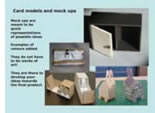
Matthew introduces modelling into the concept phase of design by getting students to explore their drawings through mock-up models – quick, speedy alternative solutions to try out a range of alternative processes, materials and construction types. The results inform further drawing and exploration of ideas and further mock-ups.
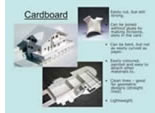
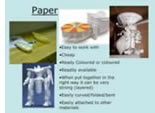
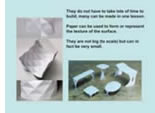
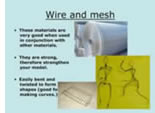
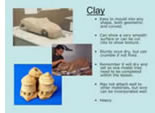
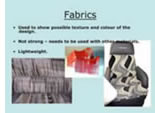
He has developed a PowerPoint presentation, Making Mock-up Models (.pdf, 885Kb), that discusses the pros and cons of different materials that could be used, including balsa wood, card/ cardboard, paper, wire and mesh, clay, fabric. This presentation explains the purpose of modelling – to:
- get a 3D (visual) idea of how the product might look;
- show the client let them 'feel' - handle the product;
- discover and explore any construction problems that may occur later;
- explore possible solutions to these problems;
- explore size and scale; and
- explore different materials, textures, finishes.
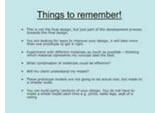
It also reinforces that mock-up models are part of a creative process and are:
- most often small in scale;
- not the final design, but just part of the development process towards the final design;
- a way of looking for ways to improve design, it will take more than one model to get it right;
- an opportunity to experiment with different materials as much as possible – thinking which material represents a concept idea the best;
- a way to discover what combination of materials could be effective; and
- not necessarily complete – you can build parts/ sections of your design, e.g. joints, table legs, seat of a swing.
Functionality is an aspect of modelling that is often neglected, he says. "When modelling, often students concentrate on the aesthetics. They get the aesthetics side right – such as shape, form, style and texture – and then they blow it on the functional – such as weight, strength, construction and assembly."
"A lot of the modelling that I've seen in the schools I've visited is literally a small scaled-down replica of what students have already decided to be a their final answer. All they have done is said, 'Right, I'm going to weld this' Why are they welding it? 'Because I want to do some welding'. No real decision has been made. Or it might be: 'I'm going to use a tenon joint here because this is something I know how to do'. Or 'I'm going to use dowel joints because I don't know anything else'. So the choice of construction, such as the kinds of joints used, is largely predetermined, either because of the student's own experience or the teacher wanting to manage the environment.
The explorative aspect of mock-up modelling is something Matthew encourages throughout a student's technological practice, particularly during construction. The modelling outlined on the Modelling in action page includes examples (some of which are not shown) of exploration through modelling – of different materials and various joints that might be appropriate in the construction – that continued through to the very end of his project.
