

Managing a Creative Environment
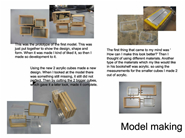
Page from the
'Making Mock-up Models' PDF
Matthew points out that managing an extensive and fluid design/modelling process is not without its issues. "If you are really going down the path of modelling to experiment with alternative processes, materials and construction type, as well as looking at the overall aesthetics, proportion, harmony and balance of the product, then you've got to anticipate constructing a large number of models using a variety of different materials and exploring different scales of models."
"Managing the environment is a key issue and needs to be debated, but it's one that we regularly have to deal with in Technology. Some of the staff actually find it quite threatening to have a lot of activities going on in one environment. It's not so easy to manage. Of course there's the health and safety aspects to consider, and also the constant question of whether the students have the capability and confidence to use the equipment that you are asking them to.
The physical workshop environment is crucial to encourage continual creative practice from students throughout a project, and for that practice to be able to be managed by the supervising staff. Since coming to Wellington College, Matthew has redesigned the workshops to ensure they incorporate areas of research (reference materials) and design (tables for study and drawing). Ideally every workshop would incorporate a computer suite for CAD drawing, which Matthew has ensured in the College's planned rebuild of the Technology block. In the interim he has set up a computer suite next door to the workshops so that students have ready access to graphic tools. This, however, poses a supervision problem for teachers, as students can be in two rooms at once and the teacher cannot leave the workshop without shutting down the machines.
To help keep on top of things in terms of knowledge and skill learning, Matthew tended to spend a lot of time structuring each week, anticipating and covering processes that students were likely to be using. "This generally meant that a new process was introduced each week, one that students had not done in the previous years. However, there are always several outcomes that are unexpected – which, of course, is a given when you are encouraging students to think outside the square – and the issues that this creates have to be managed appropriately as they arise."
Intensive modelling also means you use a lot of materials, creating cost issues. A projected average of costs was struck, balancing the minor and the major, which generally generates a fee of around $70-80 that all students pay. "Of course there are always arguments from some that their projects are costing less, but you have to strike a balance. If a student's project went significantly over this figure, and some went over $300, then they would pay the balance."
