



Jigsaw Puzzles
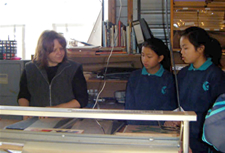
Students from Bailey Road Primary and
Intermediate visit Puzzles4Education
Class: Years 7/8
Teacher: Vanita Narsai
School: Bailey Road Primary and Intermediate School
Category: Industry links and gathering stakeholder feedback
Bailey Road School is a full primary school with it's own Technology specialist space that caters for three Year 7 and 8 classes. Each class is divided in half (approximately 16 students) for time within this space, and works in a range of contexts with Vanita Narsai to develop student understandings in relation to the Technological Practice Strand of The New Zealand Curriculum 2007. Student engagement with Technology at a Year 7 and 8 level in this school has been based on the revised curriculum since the end of 2006 in preparation for the release of the curriculum in 2007.
With Vanita's support, these classes of Year 7/8 students each formed a connection with a Year 1 student to produce a wooden jigsaw. Through in-class discussions, Vanita encouraged the students to consider a broad multicultural theme in relation to their designs as this was reflective of the make-up of the school, and the new entrant children in particular.
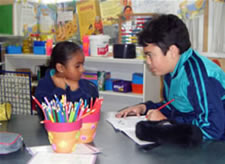
Gathering stakeholder ideas from new entrant
To develop an awareness of authenticity in relation to 'real-world' Technological Practice Vanita contacted Tracey and Mark Winther of the company Puzzles4Education to work with her students. Tracey and Mark were willing to have all six groups come through their premises to see the process they go through, from design through to the finished puzzle. They also arranged to photograph their process for Vanita to use with her students after their industry visit, to remind students about some of the key stages that might be appropriate for the development of their own jigsaw puzzles.
Through visiting Puzzles4Education, the students developed a critical awareness of the process that they might go through to develop the puzzles for their stakeholders just as Mark and Tracey do. To develop an awareness of stakeholder needs, the Year 7/8 students were assigned a new entrant child to work with and interview in regard to their likes, and interests. The feedback gained had to be reflected in the students final designs.
Mark and Tracey visited the school to see and comment on the final products and say they were "blown away" by them and the creative ideas the students came up with.
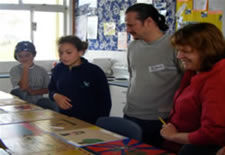
Tracey and Mark from Puzzles4Education
commenting on the students finished puzzles.
Teacher comment
The visit and the photos definitely kept students focussed on producing a fantastic end result. In some ways the best part though was going back to their stakeholders with the puzzles and showing them what they done. It was amazing to watch – the sense of satisfaction – the stakeholders ideas were truly reflected in the final product.
I'd definitely try and do a visit again as it made this real – it really motivated them to engage with their puzzles.
Derek Linington, our principal commented that the visits to Puzzles4Education were extremely worthwhile, saying "it gave additional direction for their design brief. The visit really motivated them as they had a vision for their end product. In the spirit of the revised document these students have seen first hand aspects of innovative and creative real world Technological Practice. I'd encourage all schools to make explicit connections with their own community as a key resource to support learning in technology".
 RSS Feed